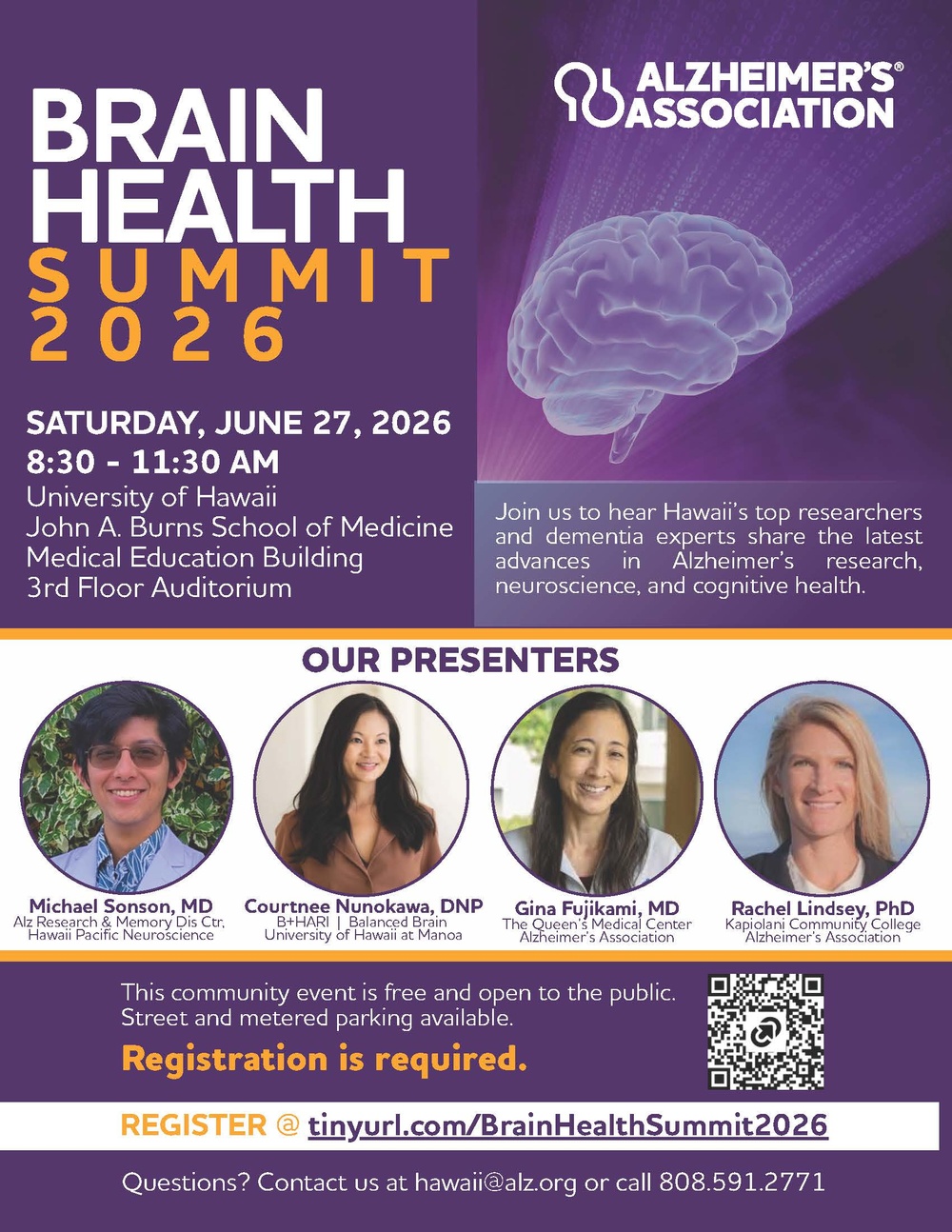
The Alzheimer’s Association Brain Health Summit brings together Hawaii’s leading researchers and experts to share the latest research updates and breakthroughs in the understanding, diagnosis, treatment, and prevention of Alzheimer’s disease and related forms of dementia.
Join us for a dynamic morning dedicated to the latest advances in brain health and hear directly from our lineup of local experts as they share fresh insights into neuroscience and cognitive health.
This free, half-day summit will spotlight new research, emerging diagnostics and therapeutic approaches, including disease-modifying treatments available in Hawaii and key lifestyle interventions that can keep our brains healthy and reduce our risk of cognitive decline.
Neuroscience Symposium – From Inflammation to Intervention, Neuroimmune Crossroads: Mechanisms, Models, and Medicine
Neuroinflammation lies at the intersection of immune signaling, neural circuitry, and disease progression. Over the past decade, extraordinary advances have deepened our understanding of microglial activation states, peripheral immune infiltration, cytokine signaling cascades, and the long-term consequences of inflammatory stress on cognition and behavior.
The challenge before us is clear:
How do we move from descriptive findings to actionable therapeutic targets in brain tumors, migraine, sleep disorders, and epilepsy?
How do we design interventions that modulate inflammatory pathways without disrupting essential neuroimmune communication in multiple sclerosis (MS), CIDP, epilepsy, headache disorders, and myasthenia gravis?
How can we integrate biomarkers, advanced imaging, and AI-driven computational models to predict therapeutic response in Alzheimer’s and Parkinson’s disease?
This conference is a call to refine our tools and bridge the gap between mechanism and intervention. As we move from neuroinflammation to neurointervention, we are not merely mapping pathways—we are building bridges: between academia, clinical science, industry, government, and advocacy communities.
Join us as more than 250 members of the interdisciplinary neuroscience community—spanning neurology, psychiatry, immunology, psychology, neurosurgery, and translational research—come together to transform neuroinflammation from a diagnostic clue into a therapeutic opportunity.
Non-Pharmacological Treatment of Mild Cognitive Impairment and Dementia
Non-pharmacological treatments play a critical role in preventing and slowing the progression of Alzheimer’s disease and related dementias. This presentation will provide the latest updates on prevention and treatment strategies, emphasizing the importance of managing midlife risk factors and adopting evidence-based lifestyle interventions. Attendees will gain practical, actionable steps to support cognitive health and learn about a comprehensive range of local, state, regional, and national resources available for individuals and families living with memory loss and dementia.
Participants in this webinar will be able to:
List risk factors for cognitive impairment and dementia and ways to reduce these risks through improved management.
Identify lifestyle interventions that have an impact on cognition and neurological disease processes, from prodromal phases to early dementia.
Identify local, state, regional, and national programs and services to improve the quality of life for individuals and families living with dementia.
About the Presenter:
Kristoffer Rhoads, PhD, is a Professor of Neurology at the University of Washington School of Medicine and serves as the Director of the Division of Neuropsychology at Harborview Medical Center. He specializes in the evaluation and treatment of mild cognitive impairment and dementia. Dr. Rhoads currently serves as the Governor-appointed Chair of the Health and Medical Subcommittee for the Washington State Dementia Action Collaborative and is also the Director and Co-lead of UW Project ECHO Dementia
*This webinar is designed for professionals and family caregivers. Eligible professionals can claim ONE FREE CE credit within 60 days of the live webinar by attending the live event or watching the recorded program.
Developments in Alzheimer’s Research in Hawaiʻi: Trontinemab with Brainshuttle™ Technology
| Awareness, News
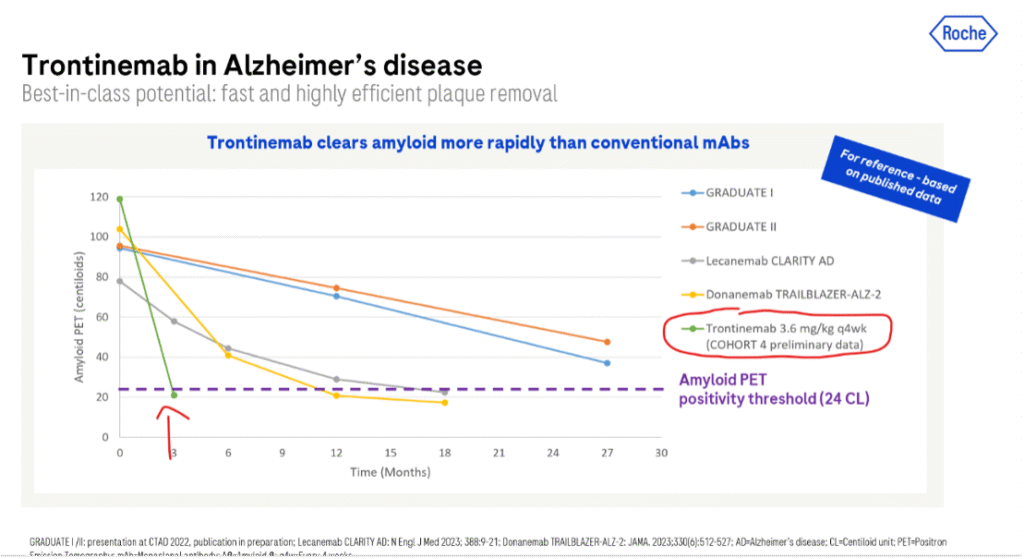
There are exciting developments in Alzheimer’s research in Hawaiʻi. In November 2025, Hawaiʻi Pacific Neuroscience announced the launch of a new clinical trial for the novel Alzheimer’s Trontinemab treatment engineered with Brainshuttle™ Technology. Early research results have shown low rates of bleeding in the brain or ARIA (Amyloid Related Imaging Abnormalities) and a faster clearing of Amyloid plaques in the brain. Hawaiʻi Pacific Neuroscience is currently accepting study participants in Hawaiʻi who are 50 years to 90 years old and experiencing early stage Alzheimer’s disease. Learn more at their website and watch Dr. Liow’s KHON2 TV News Interview.
This is listed for informational purposes only. The government does not review or approve the safety and science of all studies listed on this website. Choosing to join a study is an important personal decision. Before you join a study, learn about the possible risks and benefits and discuss all options with your health care professional.

Follow Us on Social Media